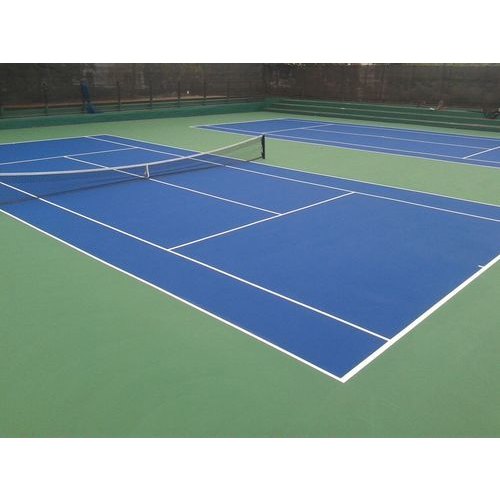
Badminton is one of those sports that looks simple at first glance—but once you step onto a properly designed court, you realize how much precision goes into it. From accurate measurements to high-quality flooring, every detail matters. Whether you’re planning a sports facility, school court, or private setup, understanding badminton court size and choosing the right badminton court construction company can make all the difference.
Let’s break it down in a practical, easy-to-understand way.
Understanding Standard Badminton Court Dimensions
When it comes to building a court, the first and most important step is getting the dimensions right. According to international standards, a badminton court has specific measurements that must be followed.
A full badminton court measures:
- Length: 13.4 meters (44 feet)
- Width (Doubles): 6.1 meters (20 feet)
- Width (Singles): 5.18 meters (17 feet)
The court is divided by a net placed at the center, with a height of 1.55 meters at the edges and slightly lower in the middle.
Getting the badminton court size correct ensures fair play and maintains consistency with professional standards. Even a small deviation can impact gameplay, especially for competitive matches.
Court Layout and Markings
Beyond dimensions, the layout lines are equally important. These markings define the boundaries for singles and doubles matches.
Key lines include:
- Baselines (back boundary)
- Sidelines (different for singles and doubles)
- Service lines (short and long)
- Center line (divides service courts)
Each line should be clearly visible, typically 40 mm wide, and painted using high-contrast colors like white or yellow. Precision in marking ensures players can make accurate calls during fast-paced rallies.
Choosing the Right Surface for Your Court
The surface of a badminton court plays a major role in performance and safety. Different surfaces are used depending on the level of play and budget.
1. Wooden Flooring
This is the most preferred option for professional indoor courts. It offers excellent grip, shock absorption, and player comfort.
2. Synthetic (PVC or Vinyl) Flooring
A popular alternative due to its durability and lower cost. It mimics the feel of wood and is widely used in academies and training centers.
3. Concrete or Cement Base
Often used for outdoor courts or budget setups. However, it’s harder on the joints and less ideal for long-term play.
Choosing the right surface isn’t just about cost—it’s about ensuring player safety and enhancing performance.
Indoor vs Outdoor Court Construction
Before starting construction, you need to decide whether your court will be indoor or outdoor.
Indoor Courts
- Protected from weather conditions
- Better lighting control
- Ideal for professional and competitive play
Outdoor Courts
- More affordable
- Suitable for casual or recreational use
- Requires weather-resistant materials
Indoor courts are generally recommended if you’re aiming for quality and long-term use.
Importance of Professional Construction
Building a badminton court is not just about laying out lines and flooring—it involves proper planning, leveling, drainage (for outdoor courts), lighting, and even ventilation.
This is where hiring a reliable badminton court construction company becomes crucial. Professionals ensure:
- Accurate measurements and layout
- Proper base preparation
- High-quality materials
- Compliance with sports standards
A well-constructed court not only lasts longer but also enhances the overall playing experience.
Lighting and Ceiling Height Considerations
Lighting is often overlooked, but it’s essential for visibility during gameplay. Poor lighting can affect player performance and even cause injuries.
For indoor courts:
- Use LED lighting with minimal glare
- Ensure even distribution across the court
Ceiling height is another important factor. Ideally, it should be at least 9 meters high to allow uninterrupted shuttle movement during high shots.
Budget Planning and Cost Factors
The cost of building a badminton court varies depending on several factors:
- Type of flooring
- Indoor vs outdoor setup
- Location and labor costs
- Lighting and additional features
A basic outdoor court can be relatively affordable, while a professional indoor court with wooden flooring and advanced lighting can be significantly more expensive.
Planning your budget in advance helps avoid surprises and ensures you get the best value for your investment.
Maintenance Tips for Longevity
Once your court is ready, proper maintenance is key to keeping it in top condition.
Simple tips include:
- Regular cleaning of the surface
- Checking for cracks or damage
- Maintaining proper lighting
- Avoiding water accumulation (especially outdoors)
A well-maintained court not only looks good but also provides a safer playing environment.
Final Thoughts
Building a badminton court is a rewarding investment, whether for personal use, schools, or commercial sports facilities. By understanding the correct dimensions, selecting the right materials, and working with experienced professionals, you can create a court that meets both performance and durability standards.
Take your time in planning, don’t cut corners on quality, and you’ll end up with a space that players truly enjoy—match after match.
 Site Title